

Chinese Underwater sensor found in Indonesia
An unusual device found by fishermen in Gili Trawangan, West Nusa, Tenggara in Indonesia is a Chinese moored underwater sensor. The waters where it was found is near the strategically important Lombok Strait, a natural chokepoint connecting the South China Sea to the Indian Ocean via the Java Sea.
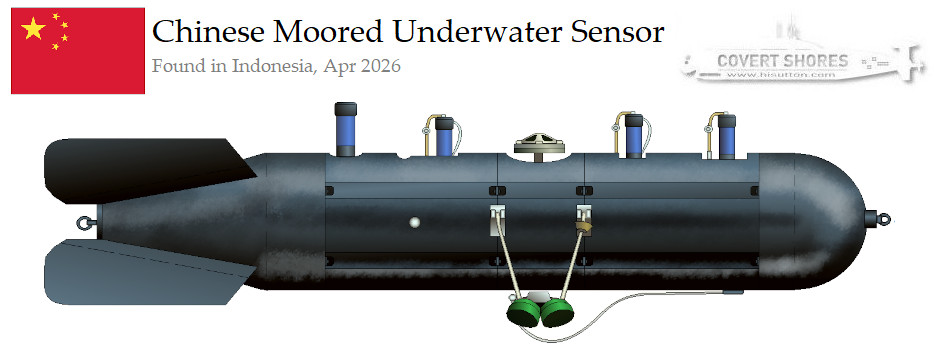
The device has been positively identified as a type developed by China and tested in the mid-2010s. It was developed by the 710 Research Institute, part of China Shipbuilding Industry Corporation (now CSSC). The institute focuses on underwater attack and defence. Known as the ‘Deep-Sea Real-Time Transmission Mooring System’ it was tested at least as early as 2016 by the Institute of Oceanology, Chinese Academy of Sciences. It reportedly achieved 190 days of real-time transmission of deep-sea data in the Western Pacific. It is possibly manufactured by Qingdao Haishan Marine Technology Co., Ltd (unconfirmed).
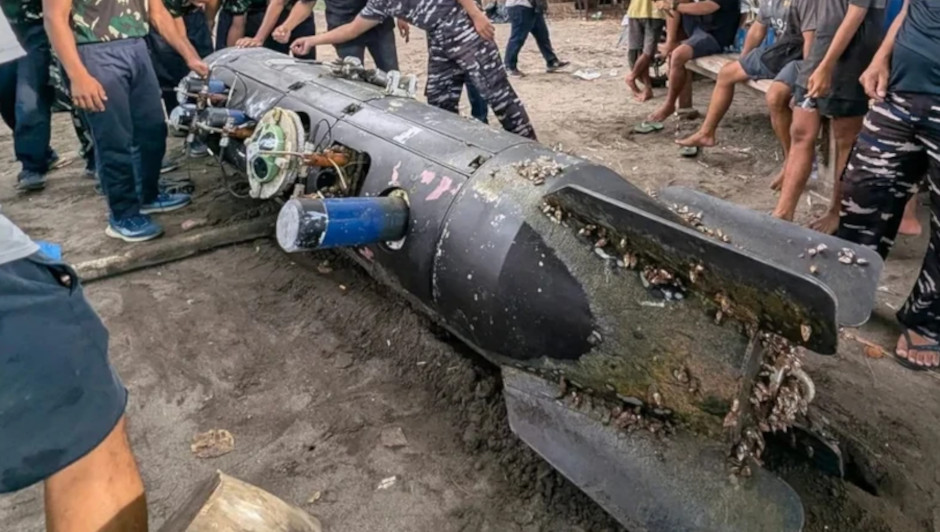
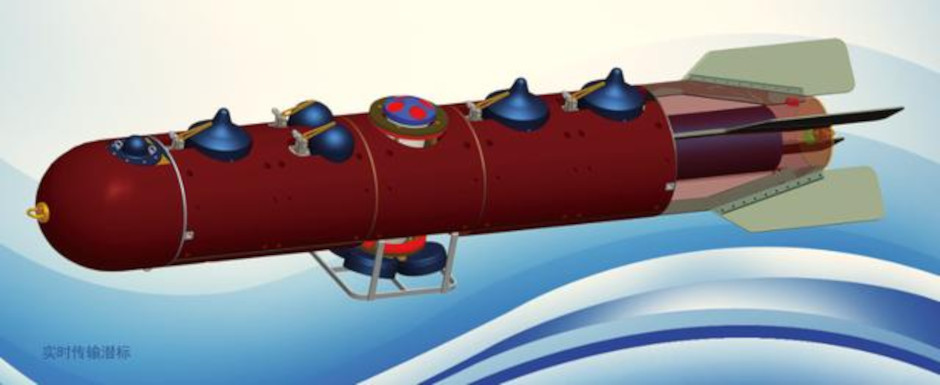
The sensor amidships with four windows is a 300 kilohertz ACDP Acoustic Doppler Current Profiler (ADCP) which measures the current.
The system can be emplaced in waters between 200 and 4,000 meters deep. The device is moored by an anchor on the sea floor, connected by lines through bull-nose rings at either end of the body. The device found is the main sensor body which is essentially a moored buoy (referred to in texts as the ‘mother buoy’) which floats between 80 and 300 meters below the surface. In one example it floated at 140 meters below the surface. The main sensor package includes:
2 x Acoustic Doppler Current Profiler (ADCP) for measuring the current
1 x Conductivity, Temperature, Depth (CTD) sensor
1 x Acoustic sensor for gathering sound and target information
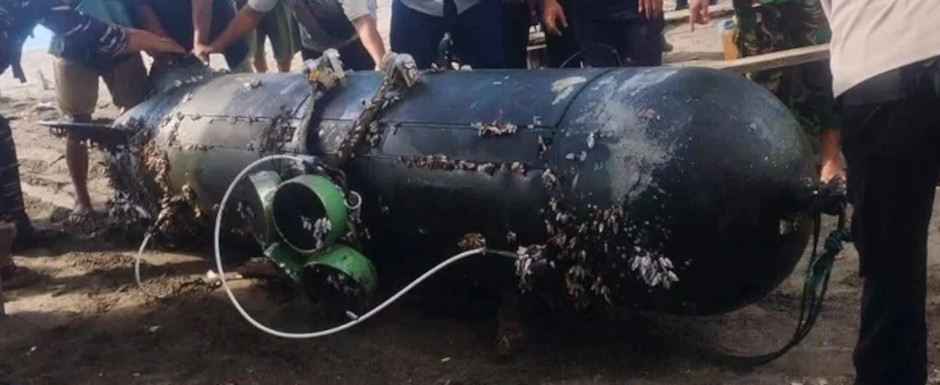
There is more marine growth on the underside of the device. The four green drums are a 75 kilohertz ACDP Acoustic Doppler Current Profiler (ADCP) which is suspended under the center.
It can remain operational for up to 12 months using internal batteries. To communicate with base it can release tethered (reusable) or untethered (single use) communications buoys which float to the surface. These are arranged on its back. It appears, based on a cursory review of the imagery, that the one found is missing a couple of these buoys suggesting that it has been transmitting to base. These buoys enable real-time data transfer from underwater instruments to satellites.
It is likely concerning to Indonesian authorities that a Chinese sensor buoy has been found in the area. It suggests that China may have a network of these sensors providing real-time information on underwater conditions in the strategic waterways which would aid their submarine operations. Previously numerous Chinese underwater gliders have also been found.
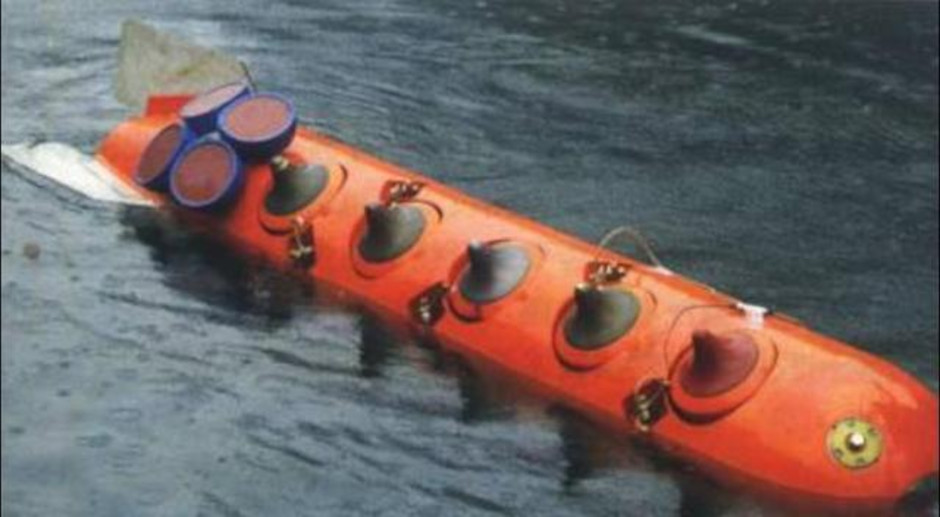
The system underwent testing in 2016. At the time the test example was painted high-visibility orange instead of the black used in the example discovered in Indonesia.
Related articles (Full index of popular Covert Shores articles)

 Chinese Sea Wing UUV (Glider)

 Indonesia’s KSOT XLUUV

