

Floating Bombs: New Trend In Dangerous Fuel Types Aboard Merchant Ships
There is a burning ship abandoned off the west coast of the Americas. On August 6th there was a serious fire aboard the Chinese car carrier (a specialised ship which delivers cars for export) Min Jiang Kou (IMO 9991771) in the Pacific. This is a useful news hook for an article I have been planning for a while: cause of the fire, or at least its significant factor, was that the ship uses high-flammable (/explosive) LNG as a fuel. Here’s a quick overview of the trend in highly dangerous fuels aboard merchant ships, with an eye on Defence relevance.
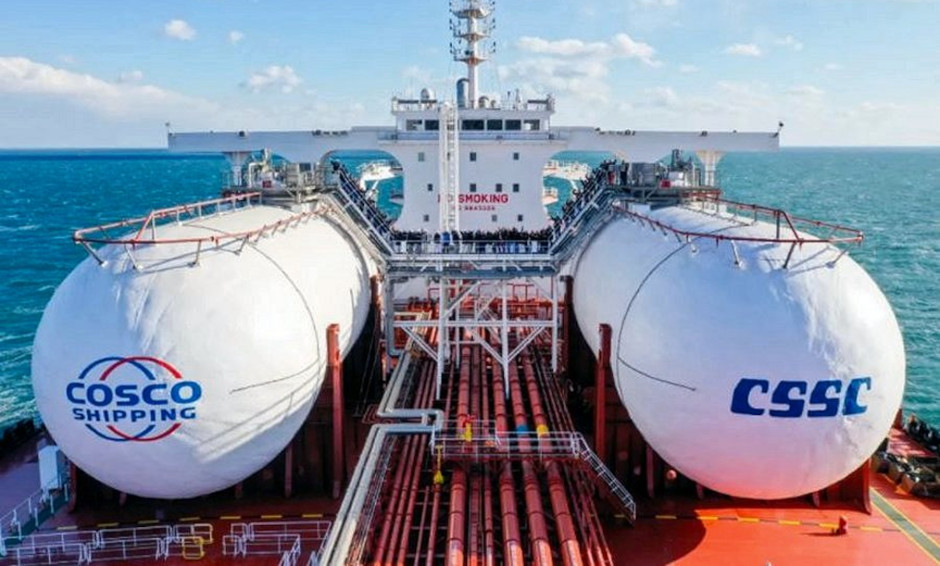 Two very large and exposed LNG fuel tanks aboard the Chinese-built and operated Very Large Crude Carrier (VLCC) Yuan Rui Yang (IMO: 9843326)
Increasingly we are seeing new fuel types being used by merchant ships. This trend is driven by environmental regulations (regardless of their current status at the IMO - International Maritime Organization), which pushes ship operators toward equipping merchant ships to operate on alternative fuels. The fuels of interest ate liquefied natural gas (LNG), liquefied petroleum gas (LPG), liquid ammonia (NH₃), and methanal (MeOH).
Merchant ships are increasingly fired upon by several governments and groups in different areas around the world, including Russia, Ukraine, Iran, United States, the Houthi Movement in Yemen and pirate or terrorist groups. So far no ships with these fuels appear to have been in the crosshairs but it is at this rate only a matter of time.
LNG, LPG and Methanol fuels represent a extreme fire and explosion risk. Ammonia isn’t easily ignited but a leak of the toxic gas can be fatal, causing a mass-casualty event. In regular peacetime operations the risks of these fuels should be manageable (although the Min Jiang Kou incident naturally raises questions. The fuel tanks for the Min Jiang Kou were buried deep inside the hull but often the fuel tanks are in exposed positions on the deck, particularly on tankers.
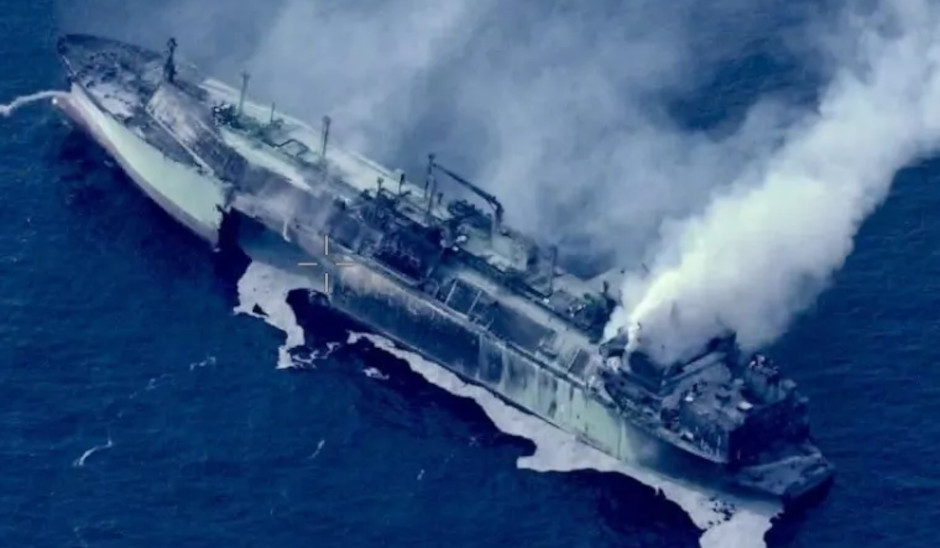 The Russian shadow fleet LNG tanker Arctic Metagaz after being struck by surface drones (USVs) in the Mediterranean. The ship wasn’t fuelled by LNG, but the massive explosions, which blew out whole sections of the double hull, illustrate the explosive potential of the fuel.
Liquefied natural gas (LNG) is the leading, and most visible, alternative fuel type, particularly for crude oil tankers. Many newbuild vessels, such as car carriers and ferries, have the LNG tanks buried in the hull, but tankers, even new construction, tend to have them on deck in an exposed position.
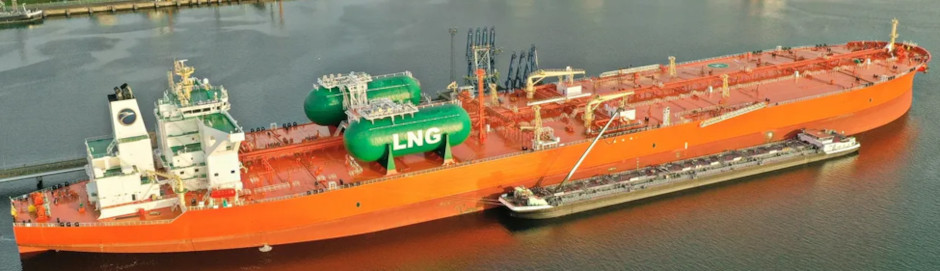 French flagged Very Large Crude Carrier (VLCC) Eagle Valence (IMO: 9910234). No prizes for guessing where the two large LNG tanks are located.
LPG (liquified petroleum gas) and Ammonia can be clustered together because some ships can use either type of alternative fuel. But most seem intended to use one or the other as an alternative to traditional fuels. Obviously ships carrying these chemicals as cargo can ‘self-bunker’, but other ships need additional fuel tanks added, Like LNG, these tanks are often above deck in an exposed position. LPG is highly flammable and explosive, while ammonia is extremely toxic and, because it is slightly lighter than air and colorless, can create mass casualty events if it leaks.
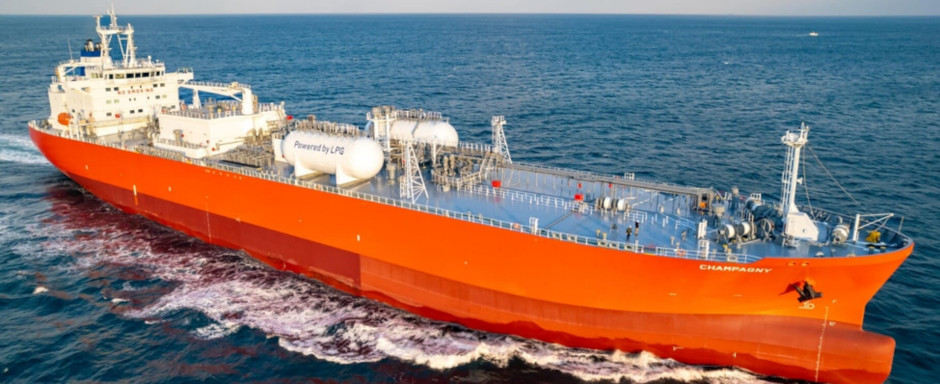 French-flagged LPG Tanker Champagney (IMO: 9983499) with LPG tanks on deck. This ship is reportedly dual fuel.
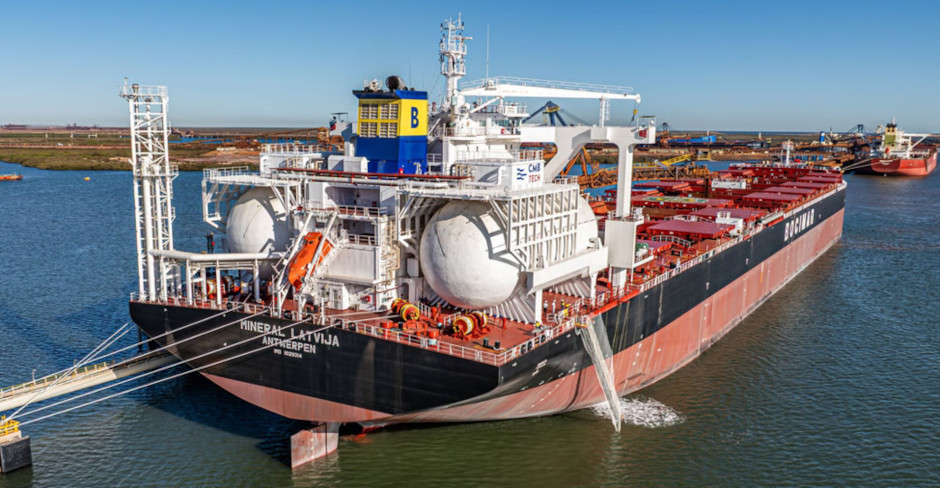 Newly constructed Belgium flagged Bulk Carrier Mineral Latvija (IMO: 1029314) has ammonia tanks behind the superstructure. Some ships using LNG also have the tanks in this position, particularly if Bulk Carriers which need the deck space above the cargo hatches free from obstruction.
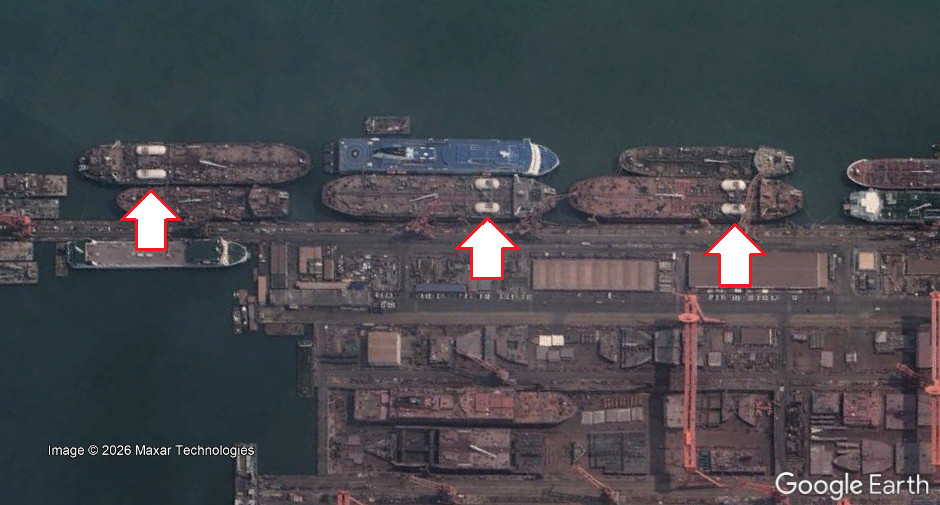 Chinese shipyards in particular are churning out LNG powered tankers.
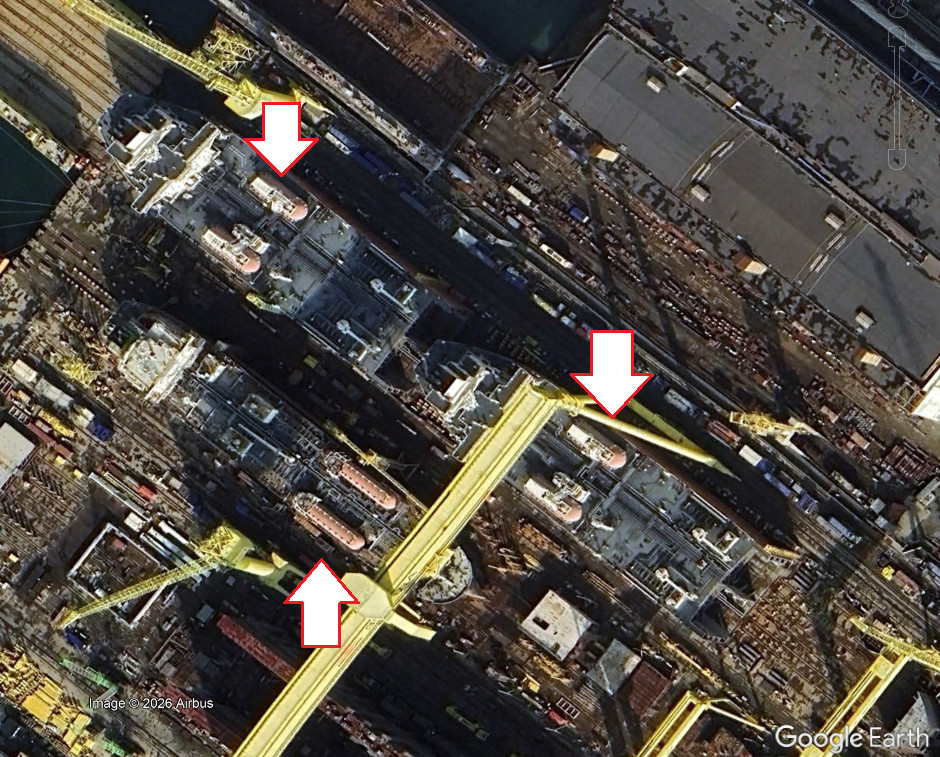 Satellite image of 3 vessels under construction at Bolshoy Kamen in Russia, 2024. Based on visual clues, the upper two appear to be LNG (or possibly ammonia) fueled tankers, while the lower one may be LPG or ammonia fueled.
It is clear that strikes on merchant vessels is an increasingly significant factor in warfare, whether people like it or not. From a defence analysis perspective we therefore need to carefully consider how this trend in alternative fuels will affect the risks and opportunities in naval warfare going forward.
Related articles (Full index of popular Covert Shores articles)

 Guide to Ukraine’s naval drones (USVs)

 Guide to Russia’s naval drones (USVs)
 Ukraine’s long-ranged attack drones (OWA-UAVs)
 Guide to Russia’s Shahed / Geran strike drones