

Mounting Ship Losses To Explosive USVs
CLICK to Enlarge
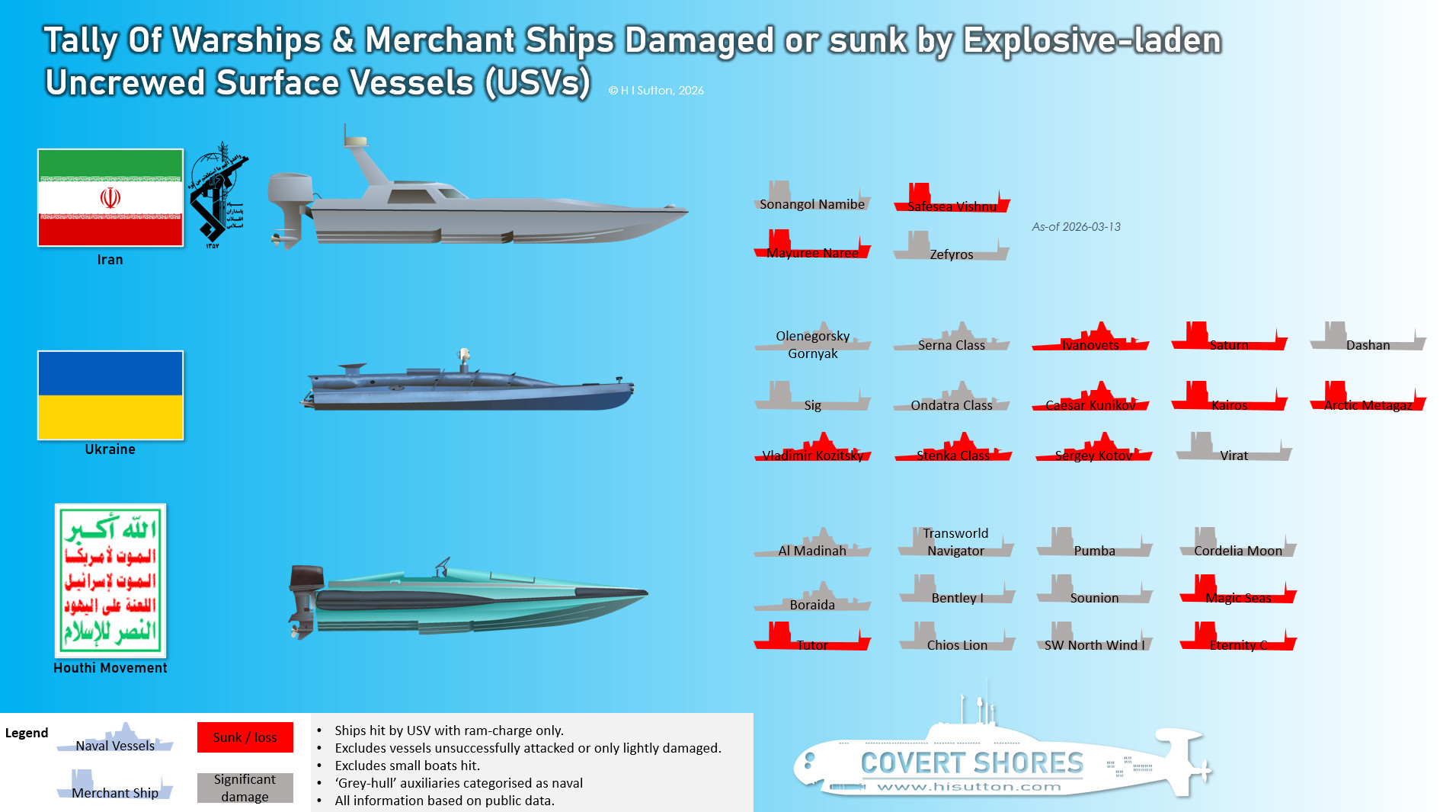
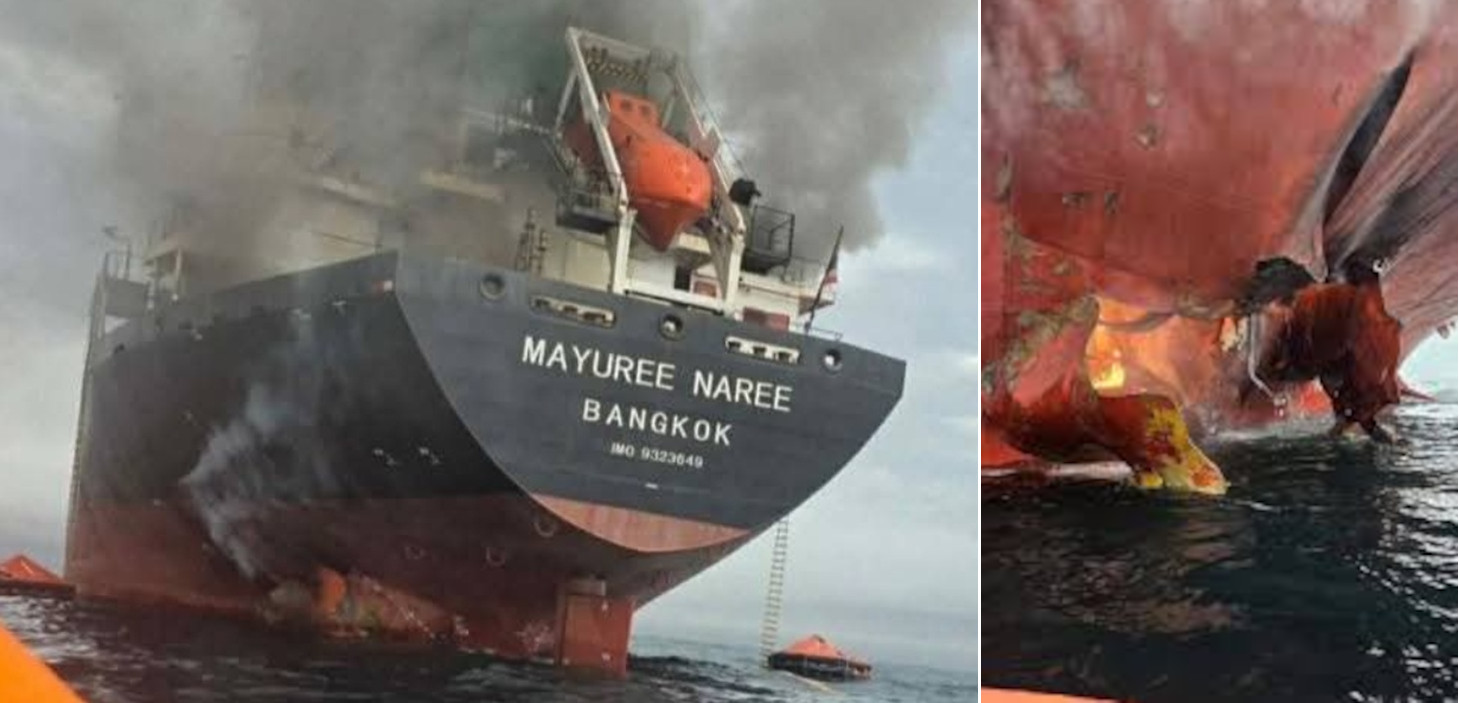
 Iranian uncrewed surface vessels (USVs) appear to have struck several times as Iran retaliates against the US-Israeli attack. It is possible that there have been more attacks using USVs, time will tell as the fog of war subsides. What is clear however is that USVs are becoming an ever more present, and concerning, feature of war.
Ukraine has made USVs a recognized term, and they remain the masters of this type of craft. But Iran was actually the first country to develop explosive-laden USVs and supplied the technology to the Houthi Movement in Yemen in 2017. On 30th Jan 2017 three USVs were used in an attack on the Saudi frigate Al Madinah (702) off the Yemeni coast. Since then the Houthis have increasingly used them against merchant ships, perfecting tactics. These generally saw USVs being used to disable tankers so that other USVs, missiles or limpet mines could be used to finish the job. It is likely that Iran has learned from the Houthi experience.
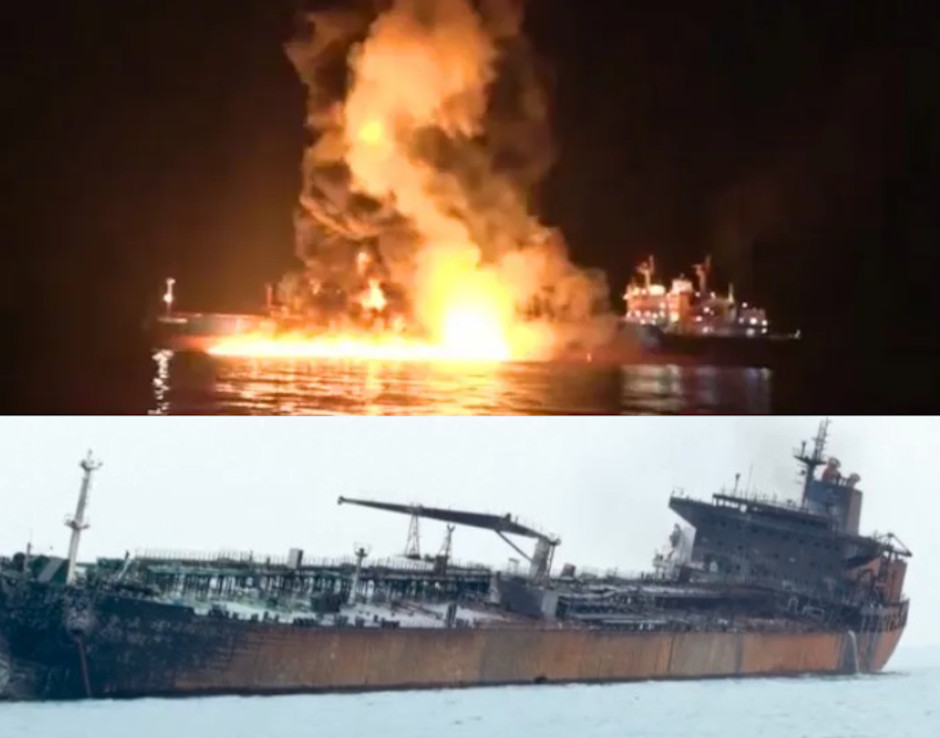
The attack on the Safesea Vishnu caused the loss of the ship and damage to another tanker, the Zefyros.
The way that Ukraine uses USVs is quite different, as part of a wider naval strategy. Ukrainian USVs are also used to lay mines, launch strikes on coastal structures (bridges, gas platforms…), inland targets (air defences, aircraft on airfields…) and aircraft (both in self defence and offensively).

The attack on the tanker Sonangol Namibe off Kuwait on March 5.
Like the types supplied to the Houthis the Iranian USVs appears to lack long-range communications and are deployed together with a command boat. They have a cockpit and can be piloted by a human who typically transfers to the command boat before the attack. Video of the attack on Safesea Vishnu suggests that the command boat was essentially at point-blank range. However Starlink is common in Iran and may be used in future.
The tally of ships struck by Iranian USVs is still much lower than either the Houthis or Ukraine’s, but it is early days yet.
Related articles (Full index of popular Covert Shores articles)

 Houthi’s Blowfish: Guide To Explosive USV Threat Off Yemen

 Ukraine’s Maritime Drones (USVs)
 Explosive Boats world history