

Countering Russian Naval Activity Off Europe With Ship-Killing Surface Drones
Free world nations in Western Europe should rapidly deploy a small but dispersed force of ship-killing uncrewed surface vessels (USVs) to monitor Russian naval activity off Western Europe.
The glorious history of fast boat flotillas in the North Sea are largely forgotten. Most countries killed off this capability in successive defence cuts. Making them uncrewed, and adapting their weapons to suit, isn’t just a new 1:1 replacement, it is a massive increase in potency. Bring back coastal torpedo boats, but with this obvious twist.
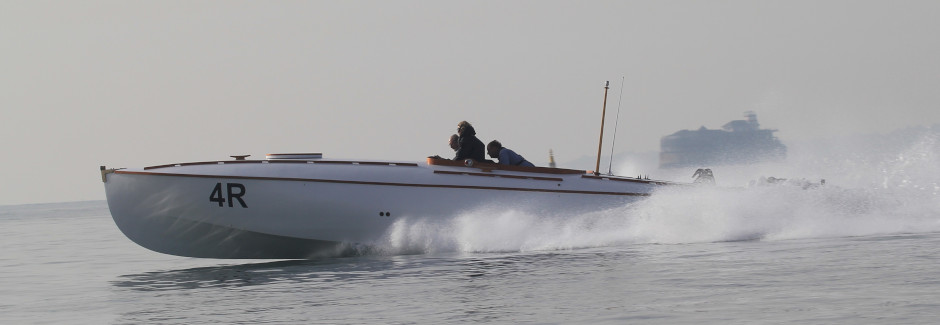
A Royal Navy Motor Torpedo Boat (MTB). The exploits of Royal Navy torpedo boats are many, particularly during Russia’s Civil War in 1919. Other European Navies also have strong yet largely abandoned traditions. Today these vessels would be uncrewed.
Photo of the replica historic torpedo boat CMB4R, simply too beautiful to ignore. Visit it at Portsmouth Historic Shipyard. Photo from nationalhistoricships.org
The vessels would need to be adapted to the weather, but they could still be small and cheap. Uncrewed boats don’t get seasick.
Cheaper than deploying frigates or offshore patrol vessels
The suggestion is that armed USVs would be a cheaper, and more effective escort than the current crewed warships in coastal regions. Instead of the Royal Navy sailing one of a small number of frigates around the UK to meet loitering or transiting Russian naval vessels, they could simply drive a USV on a trailer to Felixstowe, launch down the ramp and have it appear uncomfortably close to the Russia vessel. Because these are capable of being armed (and would be, although for cost reasons not always), the Russian vessels would have to take them seriously. Russian warships would see them as a serious threat, auxiliaries and spy ships would feel completely defenseless.
Their employment would, in many respects, build on the success of USVs in the Black Sea and Mediterranean in shaping Russian operational patterns. There are differences, not least that the West is not in a shooting war with Russia. But also, that Russia does not have air control over the waters off Western Europe, and weather conditions are often quite different. None of these are reasons not to do this however, and work in the USV’s favour, provided they are capable enough.
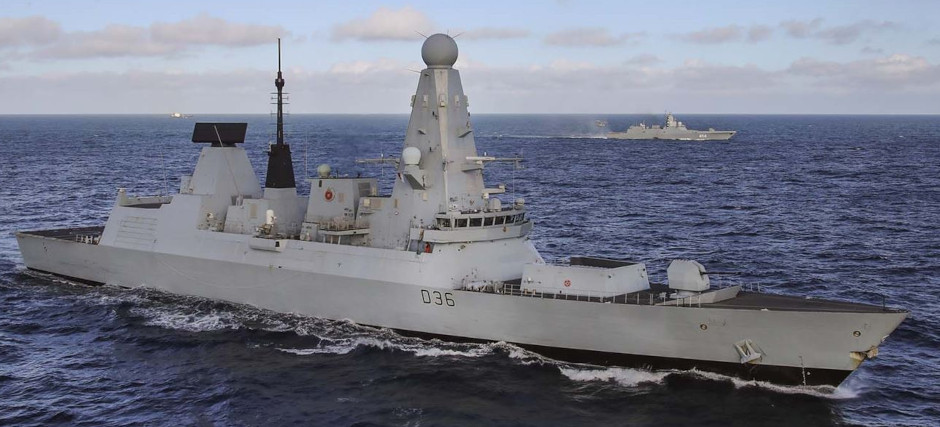 Warships, such as the Type-45 Destroyer HMS Defender (seen here in March 2019 escorting the Russian frigate Admiral Gorshkov and three auxiliary ships, MOD Photo), are incredibly expensive to deploy.
The USVs would be discreet enough to pose an elusive threat, yet visible enough to ensure that their quarry ultimately recognised their presence, otherwise the deterrent effect would be lost. They would be capable enough to constitute a credible danger, while remaining sufficiently affordable to be attritable in peacetime and expendable in wartime. Although I am not suggesting that Western navies should attack Russian vessels, Russian planners would understand that the balance of risk favours the assailant in this equation.
This capability would be relevant in the North Sea and Eastern North Atlantic. Similar capabilities could also be applied, although with slight differences, in the Baltic and Mediterranean.
Ship-Killing Surface Drones
The USVs should principally be armed with anti-ship torpedoes. The Swedish Torped-47 immediately comes to mind, as do various new projects for low-cost torpedoes. As a cheaper alternative, or complement, they could also employ ram charges like those commonly seen in the Black Sea. The vessels could also carry interceptor drones to defend against shipboard helicopters.
There are suitable USV manufacturers in almost every country around Western Europe. In the UK there are Syos, Kraken, and others less publicly known. There are more companies in Norway, Denmark, Germany and so on. Ireland doesn’t seem to have one, but it would be interesting to see uncrewed torpedo boats based on the particularly robust Safehaven Marine interceptors.
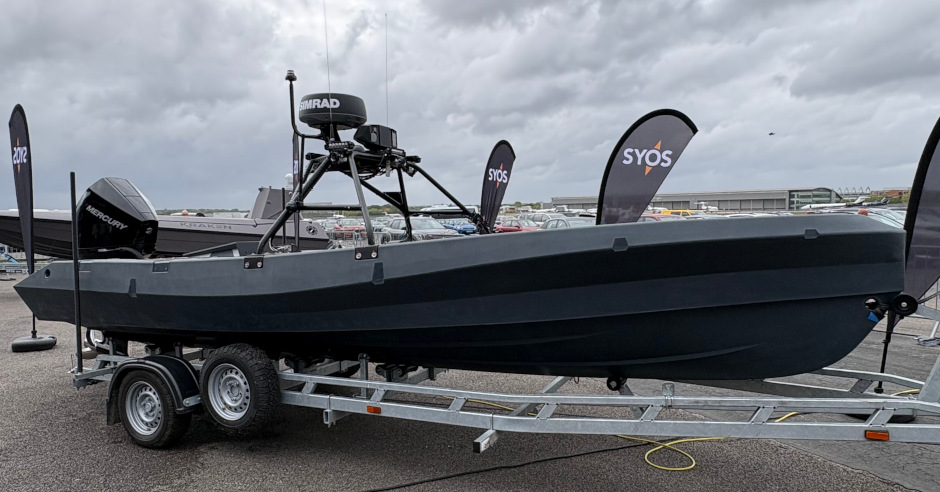
British USV manufacturers include Syos. There are numerous European manufacturers of suitible craft.
The Hardest Bit
These craft should be cheap and operated at a lower level of integration to other naval vessels. They should not be expected to fulfil other roles or have capabilities beyond the minimum to perform their core mission. It is best to buy small quantities from more agile smaller producers and flesh out equipment levels iteratively. The easiest way to mess up a good idea is to bury it in big-navy requirements and trust it to a Prime.
Related articles (Full index of popular Covert Shores articles)

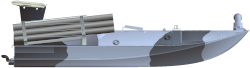 Guide to Ukraine’s naval drones (USVs)

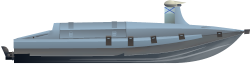 Guide to Russia’s naval drones (USVs)

 Trafalgar Class w/Cutaway