

(Full index of popular Covert Shores articles)
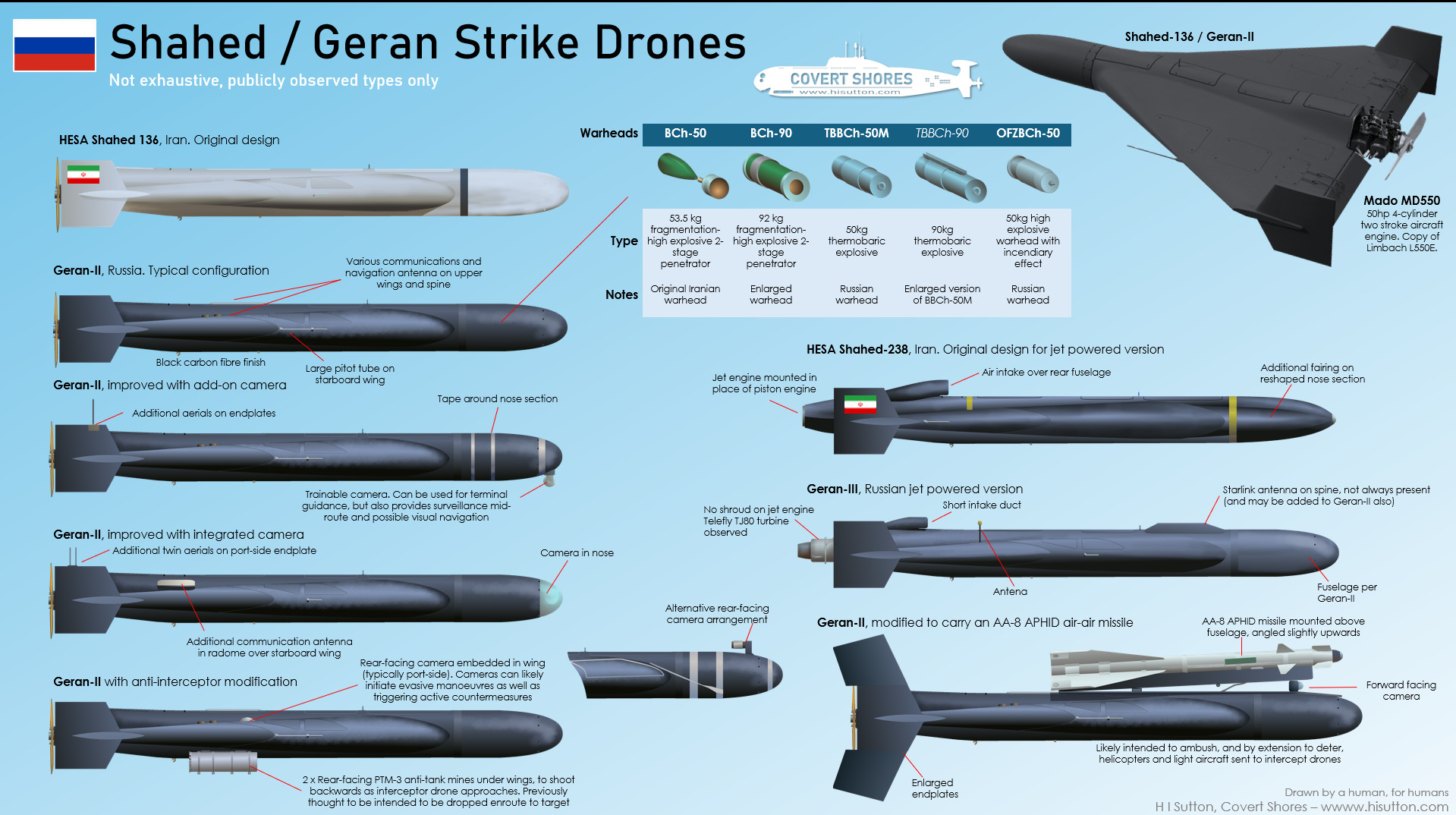
CLICK to Enlarge. Updated profile based on latest analysis.
Guide To Russian Shahed / Geran Strike Drones
 One of the best-known weapons in the invasion of Ukraine, the Iranian Shahed-136, known in Russian service as the Geran-II (герань - Geranium), is a long range strike drone (OWA-UAV). Launched in large numbers, often several hundred in a single night, it is shaping both the war and the public narrative.
It is interesting that Russia turned to an Iranian system and has not fielded comparable drones of local design. And the slightly dated design is complex to build compared to many equivalent Ukrainian types. Yet it has proven economical enough, and its large delta wing platform has allowed a wide range of modifications.
The above visual guide shows you the main observable variations. There are numerous further variations is communications and navigation, including the use of the Ukrainian mobile phone network and American Starlink satellite comms. Russia has also developed additional warheads which are only visible when the carcass is opened.
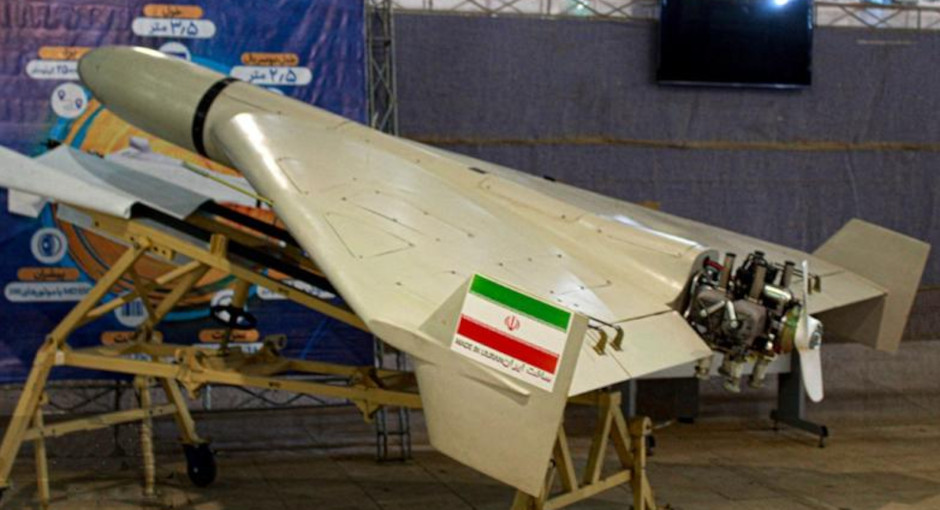
Original Iranian Shahed-136
The Geran is mainly used for long-range strike, both as a primary system and as a low-cost compliment to the much more sophisticated cruise and ballistic missiles. Russia has recently started using it to target merchant vessels, including those in open water. This likely requires specialist seekers and is a capability Iran has previously demonstrated with the Shahed-136.
Specifications
Weight: 200 kg (440 lb)
Length: 3.5 m (11 ft)
Wingspan: 2.5 m (8.2 ft)
Warhead weight: 50 kilograms (110 lb) original, can be increased up to 90kg with reduced fuel load.
Engine: MD-550 50hp 2-stroke 4-cylinder piston engine.
Operational range: 2,500 km (1,600 mi) (reported)
Maximum speed: ~185 km/h (115 mph) - around 300 km/h for jet powered version
Launch: Rocket-assisted take-off, or from moving vehicle

Alabuga - Russia's Drone Mega Factory
The main factory building Geran drones in Russia is JSC Alabuga (widely known simply as 'Alabuga') at 55.8214°, 52.0501°. The location is in a business park, the Alabuga Special Economic Zone, with several international companies nearby. The site has been expanded with large amounts of additional housing for imported workers (often from Africa) added.
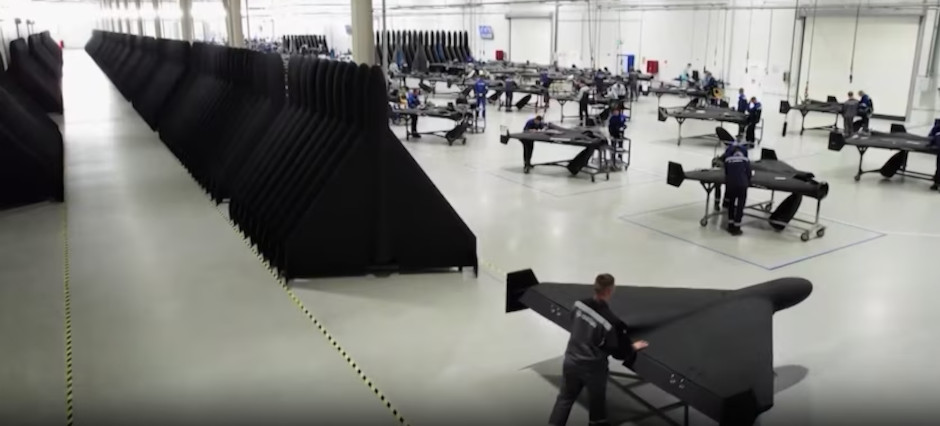
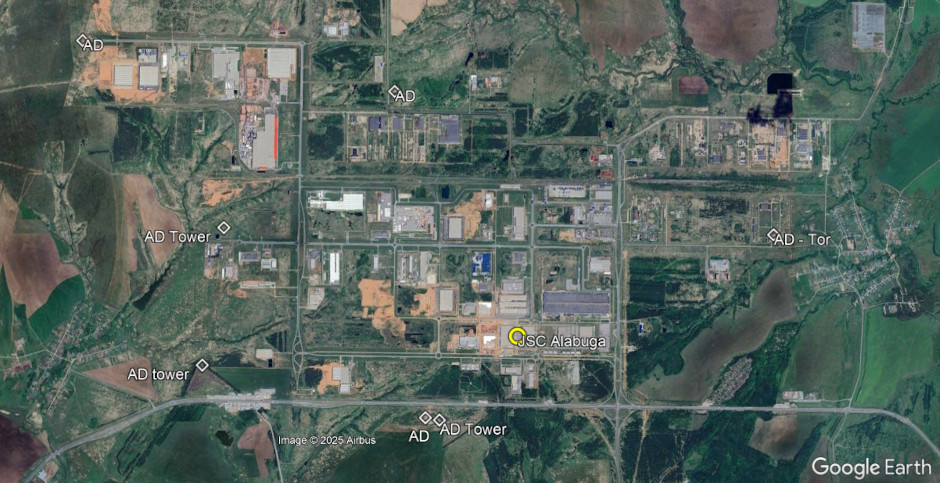
Satellite image of the site, from 2024, for reference. Since this image further structures and housing have been added as production of Gerans increases. Note the air defence sites surrounding the factory.
Improved Survivability
A major modification has been in response to Ukraine’s interceptor drones; a rearward facing camera has been incorporated, typically a ball type embedded crispy into the port (left) wing. This can be used to trigger evasive manoeuvres as the interceptor drone approaches. Rearward firing PTM-3 anti-tank mines have also been seen under the wing. Initially it appeared that these were to be dropped into farmland along the drone’s route, but the real purpose now seems to be as a form of active protection. As the interceptor drone approaches from astern they are fired towards it. It is unclear how effective this is.
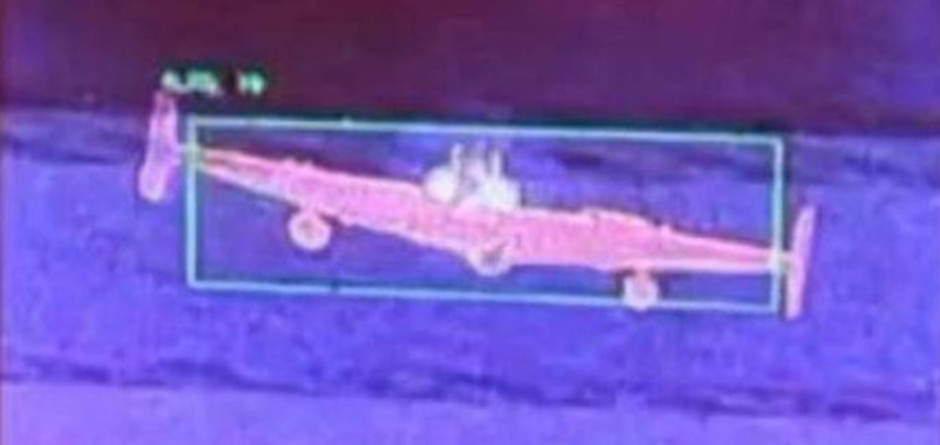
Geran-II with two PTM-3 anti-tank mines under the wings, taken from an interceptor drone.
Hunted Becomes The Hunter
There has also been at least one Geran-II modified to carry an AA-8 APHID-B (R-60M) air-air missile. Widely considered obsolete in its original role, the Cold War era APHID-B remains a threat to drones, helicopters and light aircraft. Its comparative light weight and compact dimensions also count in its favour for drone launch. Russia likely has substantial stockpiles of the missile. Presumably the carriage of the missile is intended to ambush Ukrainian aircraft sent to intercept the drone. A Ukrainian FP-1 indeed scored a lucky hit when it chanced upon a Russian helicopter during a mission.

Geran-II with AA-8 APHID-B air-air missile above the fuselage, taken from a Sting interceptor drone. Note the enlarged endplate stabilisers.
It’s also in some regards equivalent to the Iranian SAM-358, an innovative and demonstrably effective ‘loitering air defence missile’. Russia does not appear to use SAM-358, at least not in any numbers, but the Geran-APHID could play a similar role.
The APHID-B is limited however since the missile is carried facing forward, and most interceptions appear to come from 6 o’clock.
Jet Versions
A major variant is the jet turbine powered Geran-III, the Russian equivalent of the Iranian Shahed-238. These models trade range for speed, being more like a cruise missile. The Iranian original featured a jet engine in place of the piston engine, but also had a more streamlined nose and updated wing. The Russian type is however cruder, being more similar to the piston engined version with only the turbine differentiating them. The turbine is mounted without a shroud, possibly to make it easier to use different engines.
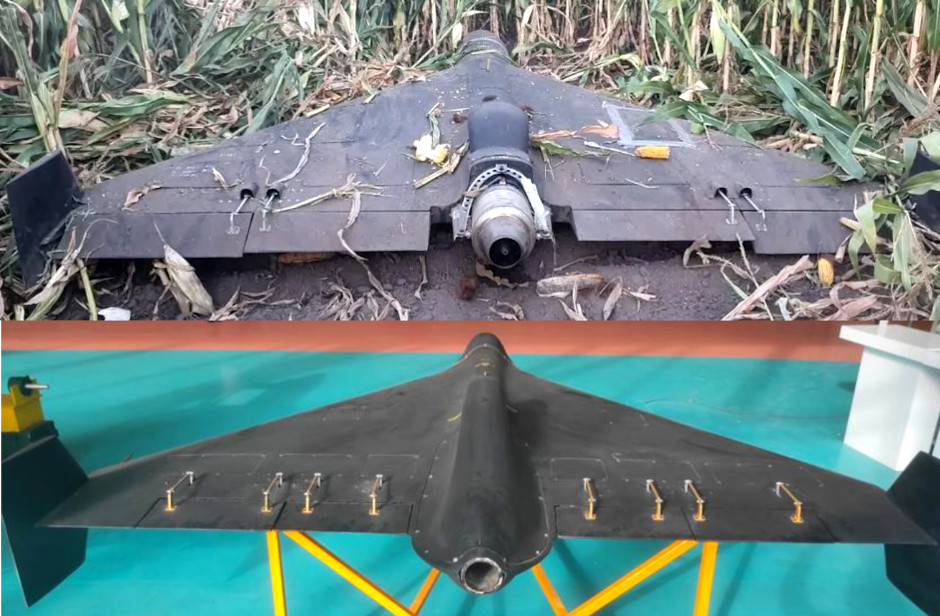
A crashed Geran-III above and Shahed-238 below. Note that as well as missing the casing over the turbine, the Russian drone has a less streamlined air intake duct and wing control surfaces unmodified from the piston engined Geran-II.
Related articles (Full index of popular Covert Shores articles)

 Ukraine's long-ranged attack drones (OWA-UAVs)
 Guide to Ukraine's naval drones (USVs)
 Guide to Russia's naval drones (USVs)